Ecommerce teams rarely break in original ways. Four ecommerce organizational structures account for most of what I see go wrong between $5M and $500M in DTC revenue: one generalist stretched across every channel, an agency running as a department, channel owners handed a number they can’t move, and a director with a title but no authority. Each one fails in a predictable place and it fails there first.
This isn’t an argument for a particular org chart. The right ecommerce organizational structure depends on your revenue, your channel mix, how much work sits with vendors, and how fast decisions have to move. What follows is a way to locate your own position and price what the pattern you’re in is costing you.
Your Ecommerce Org Chart Records Your Hiring History and Says Almost Nothing About How Decisions Get Made
Ask an ecommerce owner why the team is shaped the way it is and you’ll usually get a hiring story: who was available, who was affordable, who was already there when the .com channel got serious. That’s a real answer. It just isn’t a design.
The Structure You Have Is the Structure Your Last Three Hires Left Behind
Most ecommerce org charts are sediment. A coordinator was hired to run email, then inherited the site because she was the only one who’d log into the admin; an agency took paid because nobody had time, and kept it for four years.
None of that is negligence. It’s what growth does to a small team. The chart works until the business starts changing faster than the structure does.
Four Failure Patterns Cover Almost Everything That Goes Wrong at $5M to $500M
Four shapes keep showing up as a DTC channel goes from founder-run to team-run:
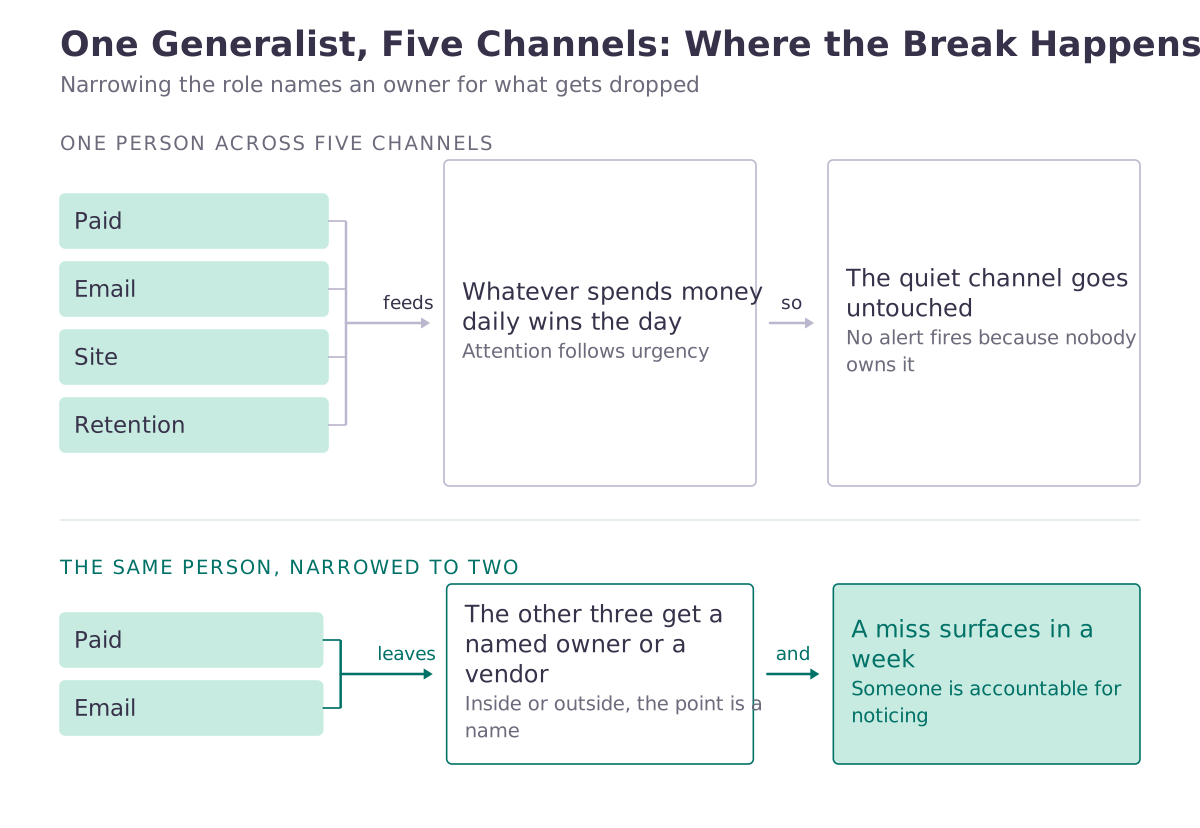
- The generalist stretched across everything: one capable person owns paid, email, site, retention, and merchandising. The channel that gets ignored is the one that goes quiet.
- The agency running as a department: a vendor holds a whole function, including the reasoning behind every decision made inside it.
- Channel owners with no P&L: people are measured on numbers they can hit while the number that pays the bills falls.
- A director with no authority: the title exists, the budget and the veto sit somewhere else, and pushback stops within two quarters.
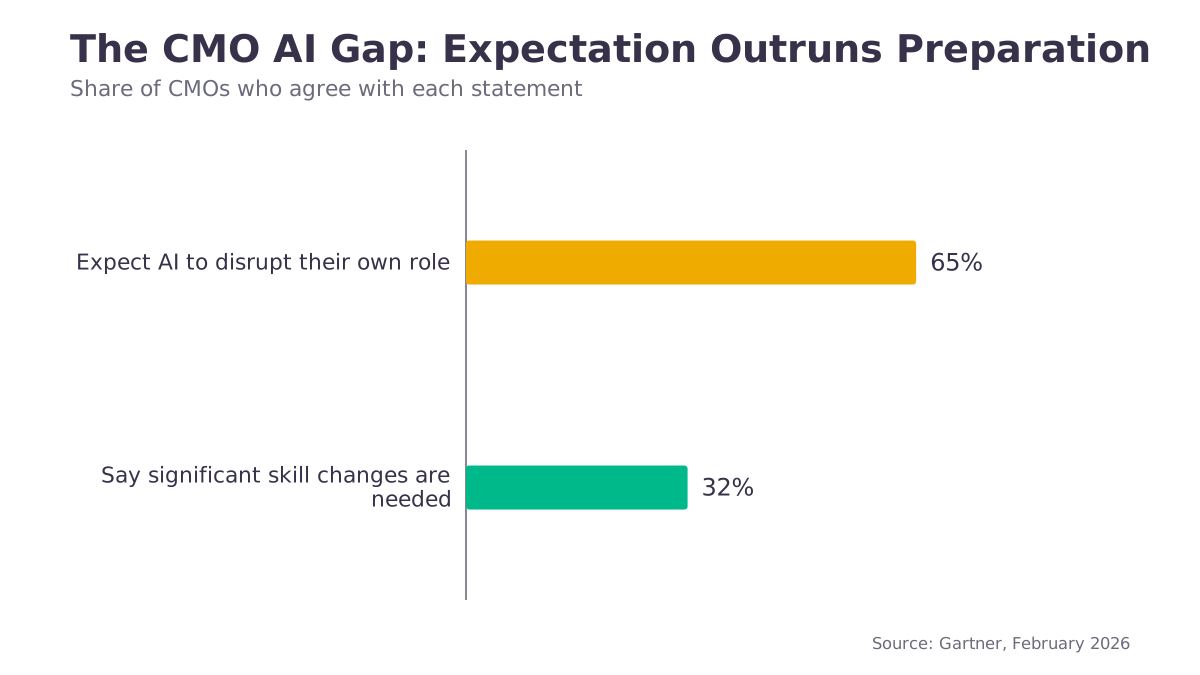
Leaders feel a change coming and still under-plan for it. In a February 2026 Gartner survey, 65% of CMOs said they expect AI to disrupt their own role, while only 32% said significant skill changes were needed on their teams. Read that gap as a structural warning: two-thirds of marketing leaders expect the work to change and about a third are planning for different people doing it differently.
Find Where You Sit Before You Redraw Anything
Ecommerce team structure problems get misdiagnosed as headcount problems because headcount is easier to buy. Before you add a role, work out which decisions are stuck and who’s holding them.
Four Questions That Locate You: Who Owns the Number, Who Can Say No, Where Work Queues, Who Hears the Customer
Four questions place almost any ecommerce team on the map:
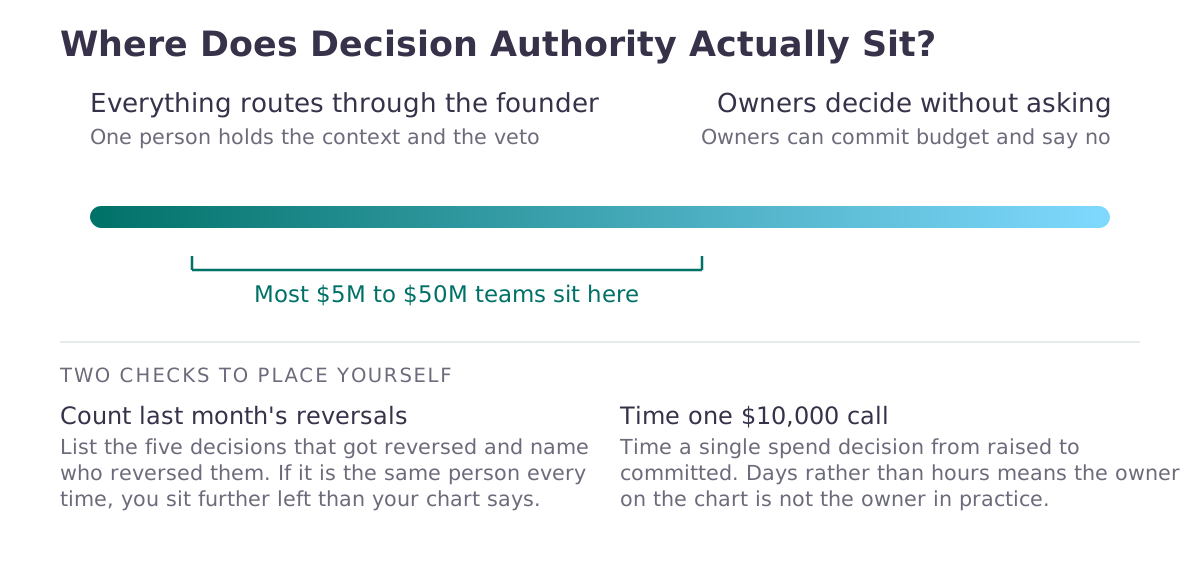
- Who owns the number? Name the single person accountable for DTC revenue and margin. If two names come up or the honest answer is you, then the channel is founder-held whatever the chart says.
- Who can say no? Find out who can kill a campaign, a vendor, or a launch date without escalating. Authority lives where the veto lives.
- Where does work queue? Follow one request from raised to shipped and note where it sat longest, because queues form in front of whoever holds too many decisions.
- Who hears the customer? Ask who read actual customer messages this month. When nobody has, the structure has put service, merchandising, and marketing out of earshot of each other.
Answer those honestly and most owners find they sit further left than the chart suggests. That’s normal at every size and worth knowing before you hire.
Structure Follows the Decisions You Make Weekly, Not the Roles You Can Afford
The roles you can afford are a budget question. The roles you need come out of the decisions you make every week and how badly those go when they’re late.
A brand launching four collections a year needs merchandising judgment next to the marketing calendar; a brand with one hero SKU and heavy paid spend needs media and creative sitting together instead. Both are correct, because they answer different weekly decisions.
This is why strategic ecommerce planning belongs before the org chart rather than after it. Marketing budgets have been flat for two years running, at 7.7% of company revenue in Gartner’s 2025 CMO Spend Survey. Flat budgets mean a new role usually gets funded by stopping something, so the plan has to say what stops.
Pattern One: The Generalist Stretched Across Everything
One person covers five channels, running mostly on a good attitude. This is the most common ecommerce marketing team structure under $15M and the hardest to see as a problem, because the generalist is usually your best employee.
What Breaks First: The Channel Nobody Had Time For Goes Quiet, and Nobody Notices for a Quarter
The break isn’t a crash. Paid gets attention because it spends daily, email gets attention because it’s on a calendar, and the fourth channel stops receiving work.
No alarm exists for a channel nobody owns. Retention flows stop being updated, category pages age out, and by the time the dip reaches a monthly review the problem is twelve weeks old.
How to Tell This Apart From “We Just Need One More Person”
Adding a person fixes a capacity problem. It doesn’t fix a priority problem and from the outside the two look the same.
The tell is what happens to dropped work. If your generalist can name what she didn’t do last month and why, you have a capacity problem and a hire will help. If she can’t, nothing is being prioritized and a second person inherits the same fog at twice the cost.
I once worked with two brothers running a music retail company who could never hand work off to the next generation. They’d delegate a task, watch someone do it their own way, and within days they’d snatch it back. They never learned how to become the people who make someone else capable, so no hire was going to fix it.
What Moves You Off It, and What Each Move Costs in Range
Three moves get you out of this pattern. Staying put for another two quarters is a legitimate fourth.
- Narrow the role: cheapest and fastest, usually a few weeks, and it only works if you’re honest about the coverage you’re dropping.
- Add capacity: generally 60 to 120 days from decision to productive, longer for a senior role. Budget the ramp, not just the salary.
- Buy the missing skill outside: fastest to start and easiest to reverse. Whether you keep the work in-house or outsource it turns on how often that decision recurs.
- Stay put deliberately: defensible when a channel is small or a bigger change is in flight. The cost is the quiet channel and you should be able to price it per quarter.
If you’ve been having the same “we need another person” conversation for three quarters running, an outside read on how the work is split tends to settle it faster than another internal round.
Pattern Two: The Agency Running as a Department
An agency doing scoped work is a force multiplier. An agency holding a whole function, including the reasoning behind it, is a structural position nobody drew on purpose.
What Breaks First: Institutional Memory, Because Every Decision Lives in Someone Else’s Slack
Performance usually holds for a while. What goes first is your team’s ability to say why anything is the way it is: why that audience was cut, why the budget shifted in March, why the page template changed.
Institutional memory is usually the first thing an outsourced department stops producing.
Two years of that and the cost of changing vendors isn’t the transition fee. It’s the six months your team spends rediscovering decisions nobody recorded.
The Tell Is That Nobody Inside Can Explain the Last Change
Ask your team what changed in the account last month and why. A healthy structure produces an answer in one sentence, from someone on your payroll.
When the answer is “I’d have to ask them,” you’re looking at a department you don’t control. Performance can be fine and the structure still be wrong. That’s the point where nobody is accountable for results in the way the org chart implies, because accountability without knowledge isn’t accountability.
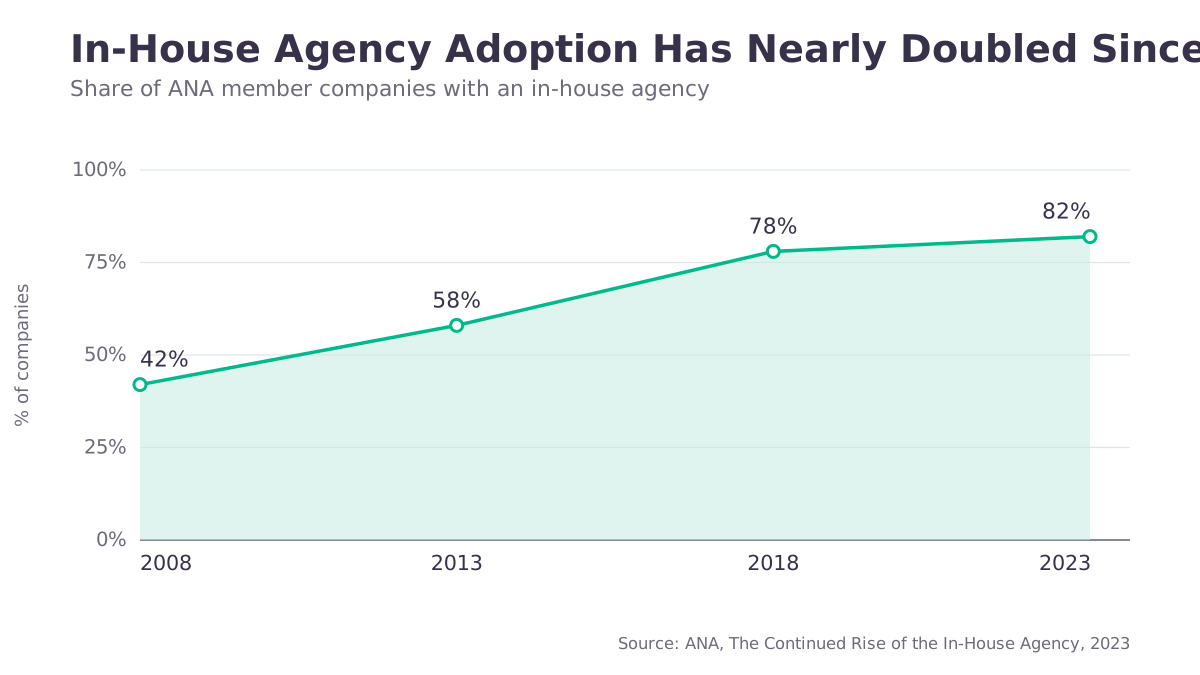
Companies have been moving on this for two decades. The Association of National Advertisers has tracked in-house agency adoption among its members since 2008 and its 2023 study found 82% had one, up from 78% in 2018, 58% in 2013, and 42% in 2008. The direction matters more than the exact figure: bringing capability back inside is now the normal path rather than an experiment.
Moving Off It Is a Sequence, Not a Switch
Firing the agency first is the version that hurts. The sequence that tends to work runs the other way: knowledge back first, then decisions, then execution.
- Documentation first. Ask for the decision history, account structure, and naming conventions while the relationship is still good. A refusal tells you something.
- Decision rights next. Move approvals inside before you move any work. Give your team at least a full quarter of approving budget shifts before anyone changes vendors.
- Execution last, only where it recurs. Weekly work belongs inside. Occasional specialized work is often cheaper to keep outside permanently.
A transition like that usually runs one to two quarters at $5M to $50M and longer above that. The variable isn’t the vendor. It’s how much of the reasoning was ever written down on your side.
Pattern Three: Channel Owners With No P&L
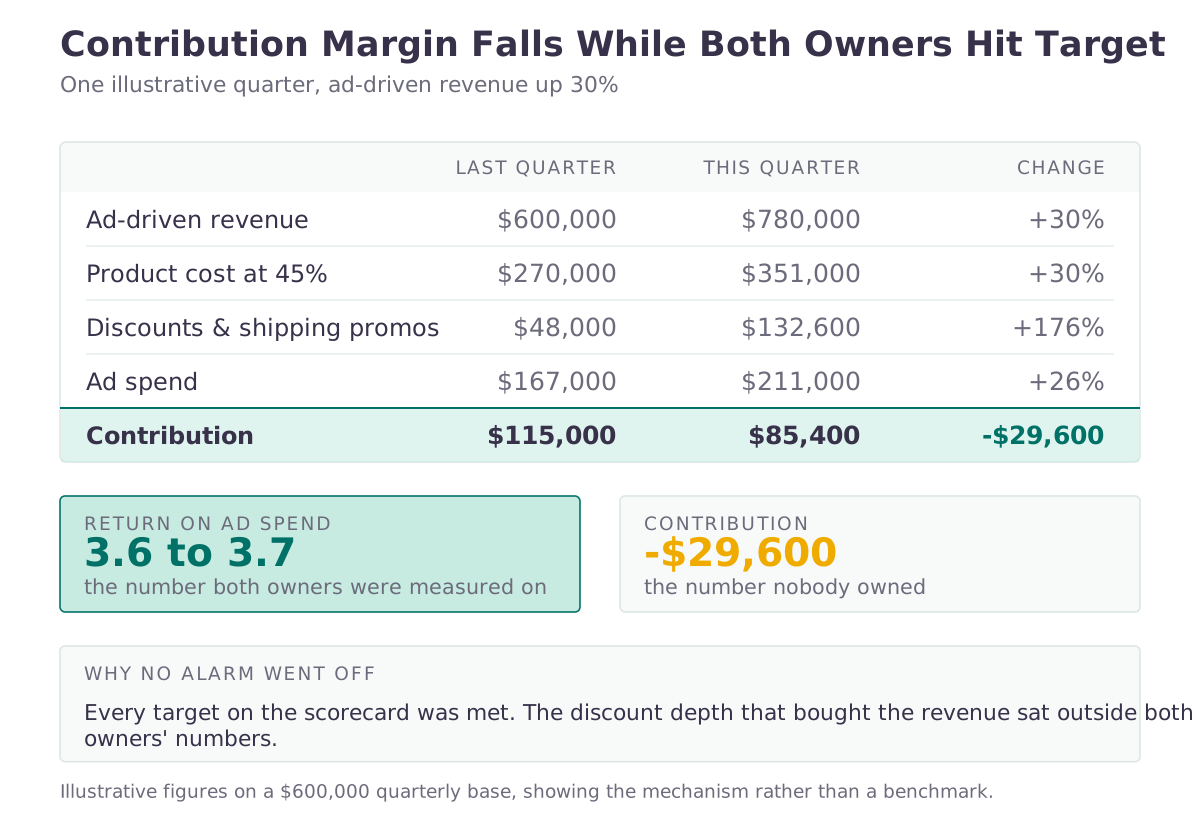
This one hides inside good dashboards. Every channel owner is hitting the target they were given and the business is making less money than it did last quarter.
What Breaks First: Two Channels Post Great Numbers While Contribution Margin Falls
Paid hits its ROAS target by leaning on discount codes. Email hits its revenue target by mailing the same buyers more often. Both numbers are real and neither owner is breaking the terms they were handed.
Contribution margin is revenue minus variable costs, which for a channel means what’s left after product cost, discounts, shipping, and its own media spend. It’s the number that falls while ROAS holds and it’s usually nobody’s job.
Giving Someone a Number They Cannot Move Is Worse Than Giving Them None
A channel owner measured on contribution who can’t set discounts, change the product mix, or move budget between channels has been handed a scoreboard with the controls removed. That isn’t accountability. It reliably produces the safest possible behavior, which at $20M looks like protecting a ROAS number while the business stops growing.
Ownership means the owner can spend differently tomorrow without asking.
What Ownership Actually Requires Before You Hand It Over
Three things have to exist before a P&L handoff is fair to the person receiving it. Each takes longer to build than the conversation about who owns what.
- Numbers the owner can see weekly: revenue, discounts, returns, and media spend for their channel, without asking finance. Monthly is too slow.
- Levers they can actually pull: real discretion over spend, promotion depth, or inventory allocation, sized to match the number they carry.
- An agreed definition: what counts as their revenue and their cost, written down and stable for two quarters. Most channel-performance arguments are arithmetic nobody settled.
The size of the P&L you hand over should scale with all three. A brand that reads ecommerce profitability monthly out of a spreadsheet usually isn’t ready to hand a channel manager margin ownership. Pretending otherwise relocates blame instead of moving decisions.
Pattern Four: A Director With No Authority
This is the most expensive of the four patterns and the quietest. You’ve hired someone senior enough to disagree with you and structured the role so that disagreeing costs them.
What Breaks First: Pushback, and Once That Goes You Are Paying for a Message Relay
I watched a marketing director at a past company get told by his boss to pull $300,000 out of ads, double revenue anyway, and put another $300,000 into radio. The director never pushed back. He said yes sir every time, the results never came, and everyone acted surprised.
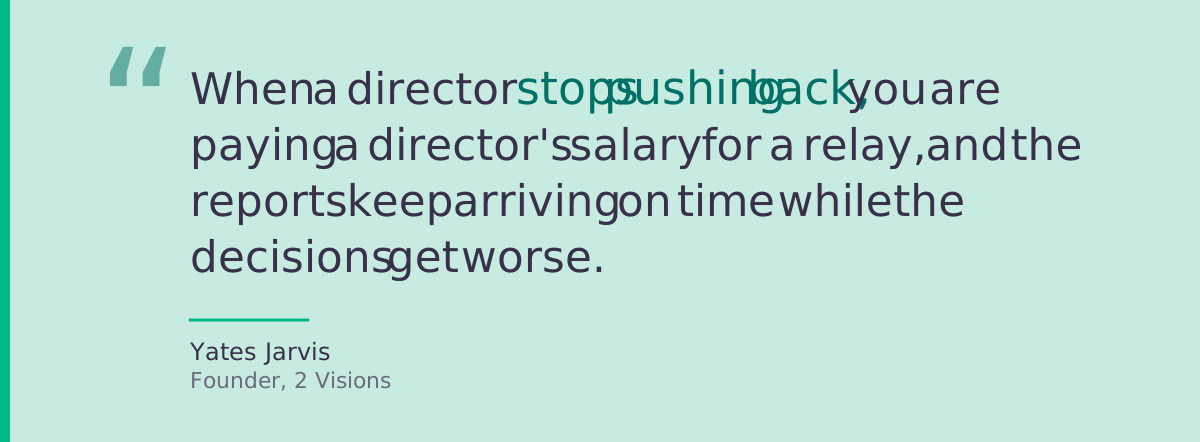
Pushback is what a senior hire is for. When a director stops pushing back, you are paying a director’s salary for a relay, and the reports keep arriving on time while the decisions get worse.
The Cost Is Invisible Because the Reports Keep Arriving on Time
Nothing in your weekly rhythm flags this. Decks get built, meetings happen, dashboards update, and the chart still shows a marketing leader in the box.
What you’ve lost is the second opinion you paid for. In McKinsey’s 2019 survey of more than 1,200 managers, only 37% said their organizations’ decisions were both high quality and timely, and 61% said at least half their decision-making time was ineffective (McKinsey, 2019). If most decision time is already wasted, removing the one person paid to challenge a decision is an expensive place to economize.
What Real Authority Looks Like on a Spectrum, From Budget Reallocation to Vendor Termination
Authority isn’t binary and a director doesn’t need all of it. It runs roughly in this order, from cheapest to grant to most consequential:
- Reallocate within an approved budget: move spend between channels up to a set ceiling with no approval cycle. Most directors should have this on day one.
- Set the calendar: decide promotion timing and launch dates inside an agreed margin floor.
- Hire and shape the team: define roles and choose people for them, within a headcount number.
- Hold and end vendor relationships: own the agency relationship, including ending it. Owners hold this rung longest and it usually matters most.
Pick a rung deliberately and say out loud which one you picked. If you want the judgment without giving up the veto, a fractional CMO for ecommerce often fits better than a full-time director, built to advise and direct without holding the top seat.
Two Patterns Can Look Identical From the Inside. Here Is How to Separate Them
Most teams carrying one of these patterns are carrying two. The symptom rarely tells you which is primary. One question usually does.
A Diagnostic Table: Symptom, Likely Pattern, the Question That Settles It
| What you’re seeing | Likely pattern | The question that settles it |
|---|---|---|
| A channel has gone quiet for months | One or Two | Can someone on payroll say what changed in it last? |
| Targets are met and margin is falling | Three | Who sees discounts and media spend in the same view? |
| Every decision waits on you | Four | When did someone last talk you out of something? |
| Reporting is polished and changes are slow | Two or Four | Who can end a vendor relationship without asking? |
| Your best person is exhausted | One | Can she list what she dropped last month and why? |
Run those questions in that order and the primary pattern usually falls out inside a week. It also shows which ecommerce KPIs worth tracking are missing from your weekly view, because each pattern hides behind a number nobody reports.
If two of these describe your team and you can’t tell which one you’re in, a working session against your own org chart is the quickest way to separate them.
What Changing Structure Actually Costs, Stated as a Range
Anyone who quotes you a number before studying your business is guessing. The honest range depends on the size of the change. That much is knowable in an afternoon.
The Range Depends on How Big the Change Is, Which Is Why Nobody Honest Quotes You a Point
Narrowing one role and handing two channels to a vendor is a few weeks of work and one uncomfortable conversation. Rebuilding decision rights across a team of twelve while an agency transitions out is two to four quarters, with discovery running the whole time because the picture keeps changing.
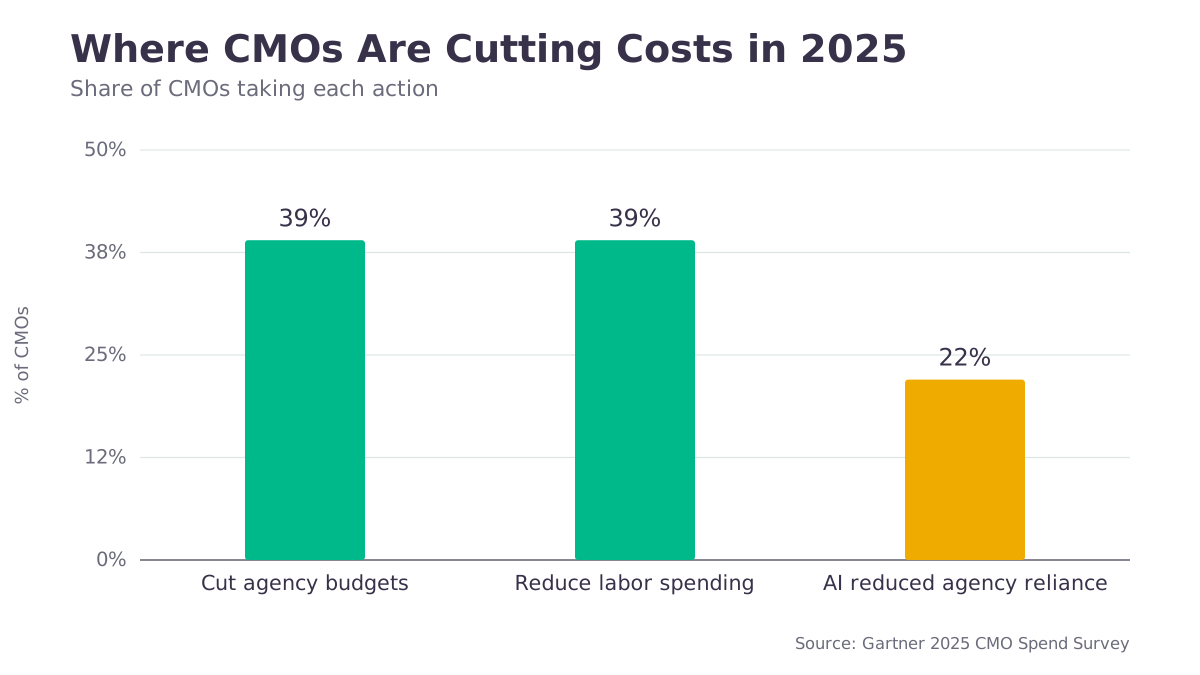
The money is already moving in both directions at once. In Gartner’s 2025 CMO Spend Survey, 39% of CMOs planned to cut agency budgets and 39% planned to reduce spending on labor, where the top action was simplifying overlapping roles; 22% said generative AI had reduced their reliance on outside agencies for creative and strategy work. Your peers aren’t answering an in-house-or-agency question, they’re reshaping both sides at once.
What Normally Slows It Down: Thin Documentation, Late Access, and the People Whose Roles Are Moving
Three things stretch a structure change past its estimate. Two of them sit on your side of the table.
- Thin documentation: when the reasoning behind past decisions lives in people’s heads, every step needs an interview first. It is the biggest driver of a long timeline.
- Late access: platform logins, financials, and agency contracts often take weeks to surface, so pulling them together before you start can save a month.
- The people whose roles are moving: they need to hear it early and from you. Changes stall most often because someone found out sideways and started defending territory.
Complexity here is normal, even for well-run teams. In McKinsey’s 2023 State of Organizations research, about two-thirds of executives called their own organizations overly complex and inefficient, and only 14% said agile operating models had been adopted across the board (McKinsey, 2023). If most large organizations can’t get this clean, a $30M DTC brand shouldn’t expect to finish in a quarter.
What to Expect in the First Two Quarters After a Structure Change
Output dips before it rises. Plan for the dip and you’ll hold the change long enough for it to pay.
Output Usually Dips Before It Rises, and Knowing That Is What Keeps the Change From Getting Reversed
In the first four to eight weeks, throughput typically drops while people learn what they now own. Campaigns ship slower, meetings run longer, and someone will suggest going back.
What should improve first is decision speed. If by week eight the same decisions still route through the same person, the change didn’t take, and that’s worth looking at before you spend another quarter on it.
Judge it in month two on decision speed and at two full quarters on revenue. That sequence is the honest answer to “when will we know.”